Float therapy

Float therapy is an hour of deep, weightless rest. You lie back in skin-warm water so full of Epsom salt that it holds you up without any effort, while light, sound and gravity fade away.
How it works
Floating is also known as REST, short for Restricted Environmental Stimulation Therapy. The idea is simple: take away almost everything your body and brain normally have to process, and let them rest.
Weightless
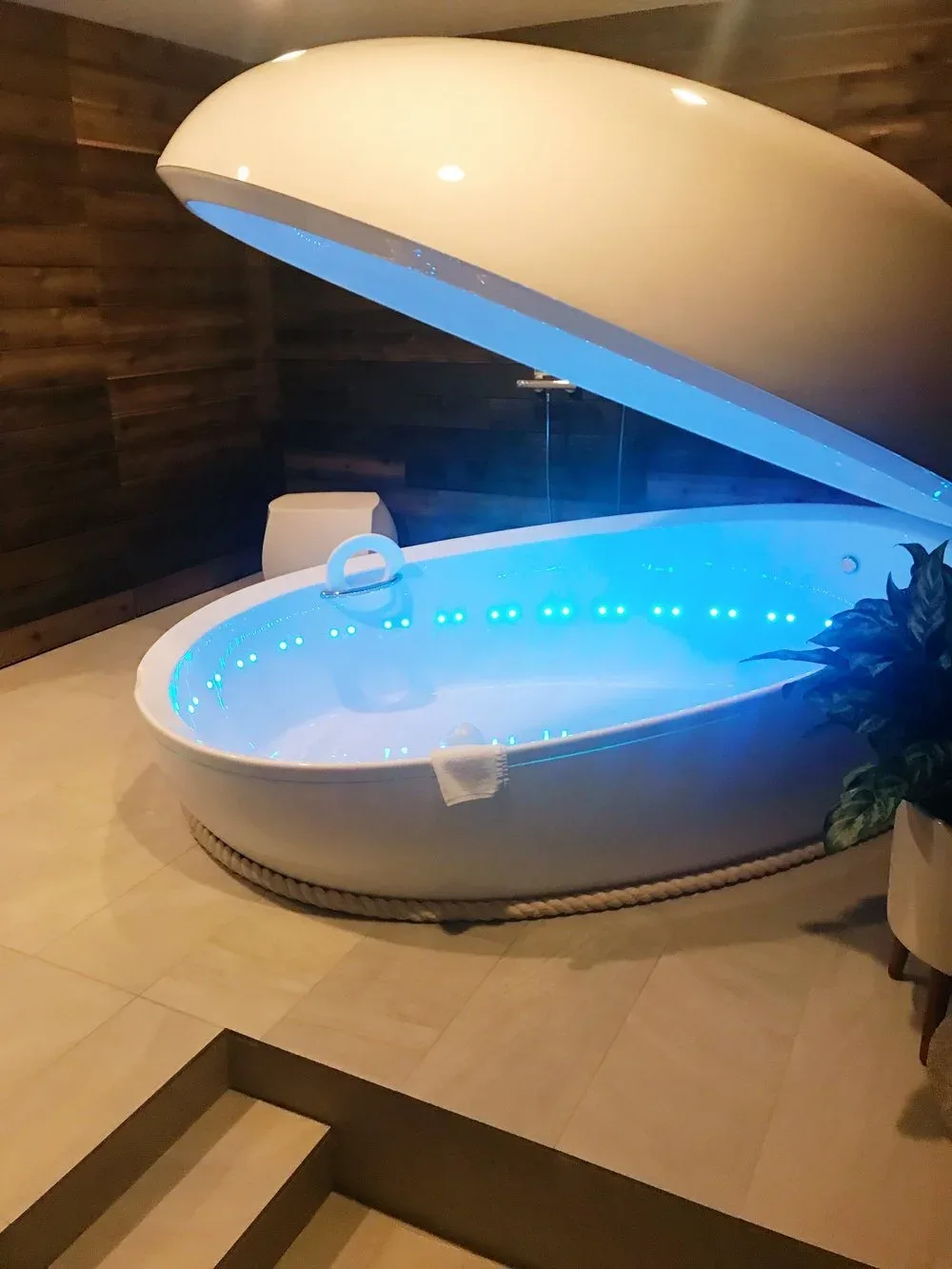
About ten inches of water with roughly 1,000 pounds of Epsom salt dissolved in it. All that salt makes the water so dense that you float on the surface with no effort at all.
Skin temperature
The water is kept at about 93.5°F, the temperature of your skin, so after a while it becomes hard to tell where your body ends and the water begins.
Quiet and dark
With the lights off and earplugs in, there is very little to see or hear. It is not about deprivation, though: it is about giving your senses a break.
Why people float
A quieter mind
With almost nothing to see, hear or feel, your nervous system gets a rare break from constant input. Many people use their float to switch off from stress, and the calm often lasts well into the rest of the day.
Sore muscles and joints
The water carries your full weight, so your back, neck and joints get a break from gravity. It is a popular way to unwind after a hard training week, a long shift on your feet or hours at a desk.
Better rest
A lot of floaters say they sleep more deeply on the nights after a float. Even an hour of stillness can feel like a full reset.
Time to think
Without distractions, some people find their thoughts wander somewhere useful. Others simply drift. Either way, there is no wrong way to float.
Your first float
Before you arrive
- Eat a light meal an hour or two before, so you are neither hungry nor full.
- Skip coffee and other caffeine for a few hours beforehand.
- Don't shave or wax on the day of your float: salt water stings fresh nicks. We have petroleum jelly for small cuts.
- Give new work time to heal: wait two weeks after a tattoo and one week after a piercing.
- Fresh hair colour stains the pod for good. Wait at least three weeks after colouring your hair, ideally a month.
- You can't float with a spray tan on your skin, however faded. Float first, tan after.
- No alcohol at all before your float, not even one drink, and no other substances.
When you get here
Arrive about 10 minutes early for your first float so we can show you around. Your float room is private, with its own shower. Use the restroom, then shower before you float, so the water stays clean for everyone. Shampoo and body wash are provided. Save conditioner for afterwards.
During your float
Put in your earplugs, lie back and let the water hold you. Most people take the first few minutes to stop "trying" to float. Buttons inside the pod switch the light and the music on or off, a face cloth hangs within reach in case salt water gets near your eyes, and you are free to sit up or step out at any time.
After your float
Shower off the salt, take your time getting ready, and drink some water. Give yourself a quiet moment before heading back into your day. First-timers often find their second or third float is even deeper, once the setting feels familiar.
Prices
Three-float intro pack
$120
Three 60-minute floats.
Single float
$70
One 60-minute float.
Time and booking
Session length
Each float is 60 minutes in the water, plus time to shower and settle before and after. Plan on about an hour and a half in total.
How booking works
Pick a day and time and send your request. We confirm it by phone or email, and a time that is already requested can not be booked twice. If your plans change, please tell us at least 24 hours ahead, so someone else can take the time.
Good to know
Do I need to know how to swim?
No. The water is shallow and so dense with salt that you float on your back without any effort, even if you fall asleep.
What do I wear?
Nothing. Floating is done nude: the room is private, and a swimsuit would press on your skin and carry detergent into the water.
What should I bring?
Just yourself. Towels, a face cloth, earplugs, shampoo and body wash are provided. If you wear contact lenses, bring your case and solution. Leave swim caps at home: nothing should touch your head or face while you float.
Is the water clean?
Yes. The pod pumps the water through a fine filter and past a UV light, and it is sanitised regularly. Everyone showers before getting in.
I am a little claustrophobic. Can I still float?
Most people who worry about it are surprised. You are in control the whole time: you can keep the lights on and get up whenever you want.
Will my skin wrinkle?
No. Salt water doesn't prune your skin like a long bath, and many people find their skin feels softer afterwards.
Is there anyone who should not float?
Floating is not for anyone with a seizure disorder, a pacemaker or incontinence, or past 36 weeks of pregnancy. Please wait if you have an open wound, an infection or are feeling unwell. If you need a hand getting in and out of the pod, bring someone who can help you. With any other medical condition, check with your doctor first and mention it in your booking request.
Can I float while pregnant?
Yes, through your first and second trimester and early in your third. We stop at 36 weeks. Please check with your doctor first, and mention it in your booking request.
Can I float on my period?
Yes. Wear a tampon, as you would for swimming, and change it after your float. If you would rather skip a heavy day, tell us and we will move your session.
Can kids and teens float?
Yes. From 15, teens can float on their own. Younger floaters need a parent or guardian who stays on site for the whole session.
How often should I float?
Whatever fits your life. Some people float weekly, others every few weeks. If you are new to it, two or three floats fairly close together help you settle in.